
CONSERVATIVE AND RESTORATIVE DENTISTRY
Stopping decay early and rebuilding your tooth in a tooth-coloured material.
A filling repairs a tooth that has been damaged by decay, a chip or wear. The damaged part is gently removed and the space is sealed with a strong material that restores the tooth’s shape and protects it from further decay. Most fillings are done in a single, comfortable visit.
Book a Consultation Explore Filling Options
Tooth-coloured fillings. Local anaesthesia when needed. Usually one visit.

A filling that blends in with your tooth.
THE IDEA IN ONE PICTURE
Decay is caused by bacteria that slowly soften the hard outer layers of a tooth. Left alone, it spreads deeper towards the nerve. A filling removes the softened tooth, cleans the space and seals it with a material that bonds to the tooth, stops the decay and lets you bite normally again.
Whether a filling is the right repair is decided only after examination and, where needed, an X-ray.
Illustrative concept of a tooth-coloured filling.
Small cavities often cause no pain at all and are found at a check-up or on an X-ray. These are common signs worth having checked before the decay grows.
A brown or black mark, a rough patch, or a small hole you can feel with your tongue.
A short, sharp sensitivity in one tooth when eating something sweet, hot or cold.
Floss that shreds, or food that keeps getting stuck in the same place, can point to decay between teeth.
A small corner or edge that has broken, often from biting something hard.
An old filling that has fallen out, cracked, or developed a dark edge where decay can start.
Small worn grooves at the neck of the tooth, often sensitive, which can be sealed with a filling.
When a filling may not be enough. Pain that lingers after hot or cold, wakes you at night or throbs by itself can mean the decay has reached the nerve, which may need root canal treatment. Swelling that is spreading, a fever with tooth pain, or difficulty swallowing or breathing needs urgent dental or medical care the same day.
The best repair depends on how big and deep the damage is and how much healthy tooth remains. Your dentist checks:
Very early decay that has not formed a hole can sometimes be stopped with fluoride and better cleaning, without a filling. Very large cavities may need an inlay, onlay or crown instead.

Different materials suit different teeth and situations. Your dentist will recommend the option that best protects your tooth, and explain why.
After the decay is removed, a bonding agent is applied and composite resin is placed in thin layers, each hardened with a blue curing light, then shaped and polished. The shade is matched to your tooth.
For most small to medium cavities in front and back teeth. Because it bonds to the tooth, less healthy tooth needs to be removed. Usually completed in one visit.
A tooth-coloured material that bonds chemically to the tooth and slowly releases fluoride, which helps protect the surrounding tooth from new decay.
For cavities near the gum line, in milk teeth, in people at higher risk of decay, or as a base under other fillings. It is less hard-wearing on heavy biting surfaces.
A custom piece of ceramic or composite is made to fit the prepared cavity exactly and bonded in place. An onlay also covers one or more of the chewing points.
For larger cavities where a direct filling may not be strong enough, but a full crown would remove more tooth than needed. Usually two visits.
A soft, short-term filling that seals and protects the tooth for a few days or weeks until the permanent repair is placed.
Between visits for root canal treatment, inlays or onlays, or when a sensitive tooth needs time to settle first. It is not meant to last, so the follow-up visit matters.
The failing filling and any decay beneath it are removed, and the tooth is restored with a new filling, inlay or onlay, depending on how much tooth remains.
When a filling is cracked, leaking, has new decay at its edge or has fallen out. Intact silver fillings do not usually need replacing just because of their age or colour.
A thin protective coating, sometimes with a very small filling, seals the deep grooves of the back teeth so food and bacteria cannot settle there.
For children and teenagers soon after the adult back teeth come through, and for adults with deep grooves or very early decay in the grooves.
The tooth is examined and X-rayed if needed. The filling material and shade are explained and agreed with you.
The tooth is numbed if needed and kept dry, and only the decayed or weakened part is removed.
The filling is placed in layers, each set with a curing light so it bonds firmly to the tooth.
The filling is shaped to your bite, checked so it meets the other teeth evenly, and polished smooth.
Most fillings are completed in one visit, often in under an hour. Inlays and onlays usually need two visits.
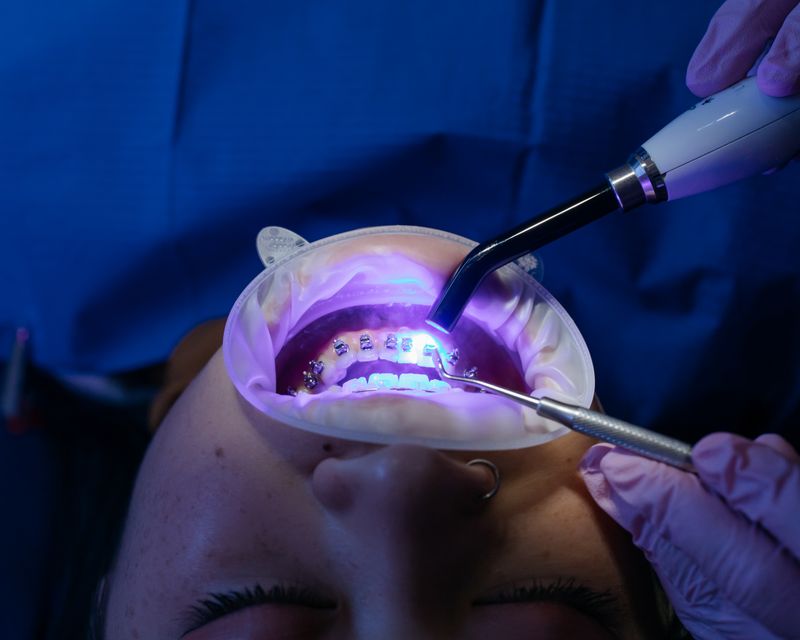
Today’s fillings are tooth-coloured, bond directly to the tooth and are hardened in seconds with a curing light. Your care is planned to keep you comfortable:
Photographs on this page are illustrative and do not show clinic patients or results.
The tooth is numbed with local anaesthesia when needed, so most people feel only pressure and vibration. Very small fillings and sealants often need no anaesthesia at all.
Most single fillings are completed in one visit, often in under an hour. Larger or multiple fillings can take longer, and inlays or onlays usually need two visits.
Modern composite fillings are strong and long-lasting for most cavities, and they bond to the tooth so less healthy tooth is removed. For very large cavities, an inlay, onlay or crown may be stronger. Your dentist will advise for your tooth.
Many fillings last for years, often a decade or more. How long yours lasts depends on its size, where it is, your bite, grinding, and how well new decay is prevented around it.
Tooth-coloured fillings are fully hardened before you leave, so you can eat once the numbness has worn off. Avoid very hard foods on that tooth for the first day.
Yes, new decay can start at the edge of a filling if plaque builds up there. Good brushing, cleaning between teeth, fewer sugary snacks and regular check-ups help prevent it.
Routine fillings can usually be done during pregnancy, and treating decay early is important. Please tell your dentist if you are pregnant so treatment can be planned at the right time.
BOOK A CONSULTATION
An examination, and X-rays if needed, show which teeth need attention and the best way to repair them. You will leave with a clear plan and an estimate, with no pressure to start.
Book a Consultation
Lost a filling or broken a tooth? Call and we will try to see you as soon as possible.