
TOOTH REPLACEMENT
Replacing a missing tooth from the root up, when it is the right choice.
A dental implant is a small post, usually made of titanium, placed in the jawbone to hold a replacement tooth. It is one way to replace missing teeth, and it is not right for everyone. An examination and imaging come first, so the advice fits your mouth, your health and your wishes.
Book a Consultation Explore the Options
Clear planning. Calm, well-explained care.

A plan made around your jaw.
THE IDEA IN ONE PICTURE
An implant replaces the root of a missing tooth. Once it has fused with the bone, which takes time, a connector and a crown are attached on top. Whether this suits you, and how long it takes, depends on your bone, gums and general health, and is only known after examination and imaging.
Illustrative concept of an implant and crown.
Gaps at the back make chewing harder, and gaps at the front can affect confidence. Leaving a gap can also let neighbouring teeth drift, so it is worth having it looked at.
A single gap can often be treated without involving the teeth either side.
More than one gap raises the question of how many implants are needed, and where.
Dentures that slip or rub can make eating and speaking harder.
Bone can shrink after a tooth is lost, which affects what can be done.
When to seek care promptly. Swelling of the face or jaw, difficulty opening your mouth, fever with tooth pain, or severe pain should be looked at urgently. If you have trouble swallowing or breathing, contact emergency services straight away.
Two people with the same missing tooth can need very different care. Your dentist weighs several things before advising whether an implant is suitable:
An implant is not the only choice. A bridge, a denture, or leaving the gap can be perfectly good outcomes of an assessment.
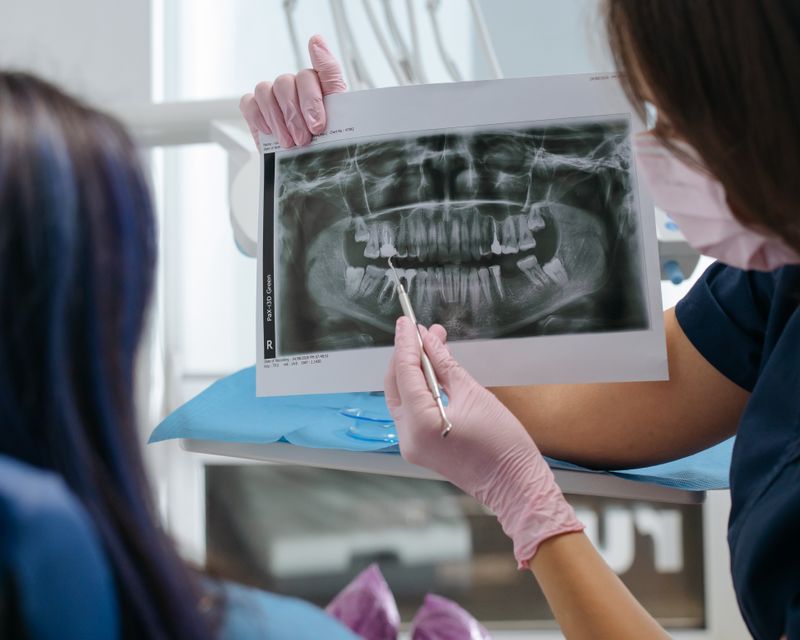
These are stages and options rather than choices to pick from a menu. Which apply to you is decided only after assessment.
Your dentist examines your teeth, gums and bite, and takes X-rays. A more detailed 3D scan is often used to measure the bone and locate nerves and sinuses.
Before any decision about an implant, so that the plan is based on what your jaw can actually support.
The area is numbed and the implant is placed in the bone. After a healing period, a connector and a crown are fitted. Stitches are often needed.
When one tooth is missing, the gums are healthy, and there is enough bone, or bone that can be built up.
A few implants carry a bridge or a denture that replaces several teeth. Some versions are fixed in place, and others can be removed for cleaning.
When several or all teeth are missing, or a conventional denture does not stay comfortably in place.
A bone graft, or in the upper jaw a sinus lift, adds bone where there is too little. It is sometimes done at an earlier visit, and it lengthens the overall treatment.
When scans show the bone is too thin or too short to hold an implant securely.
A conventional bridge, a removable denture, or leaving the space and keeping the surrounding teeth healthy.
When an implant is not suitable, not wanted, or better delayed, for example while gum disease or other health matters are treated.
A clinical examination and imaging, so your dentist can see the bone, the gums and the nearby structures.
Whether an implant is advised, how many visits and months it may take, the risks and benefits, and the alternatives.
The area is numbed and the implant is placed in the bone. Sedation may be discussed where it is available and suitable.
The implant needs time to fuse with the bone. Your dentist then fits the connector and crown, and reviews you afterwards.
The steps, the healing time and the number of visits depend on the individual case.

Some soreness, swelling and bruising in the first days is common and usually settles. Knowing what is normal, and what is not, makes recovery easier:
Your dentist will explain the risks that apply to you before you agree to treatment. Photographs on this page are illustrative and do not show clinic patients or results.
The area is numbed first, so you should feel pressure but not sharp pain. Some soreness and swelling afterwards is normal once the numbness wears off, and your dentist will advise how to manage it.
It varies a great deal. The implant needs time to fuse with the bone, often a few months, and bone grafting or other preparation adds to that. Your dentist can give you an idea of the likely timeline once they have seen your scans.
Many implants last for years, but no one can promise how long yours will last. It depends on your bone, your health, your cleaning and whether you smoke. The crown may need repair or replacing before the implant itself does.
It depends on your bone, gums, general health and habits. Gum disease, smoking and some medical conditions or medicines can affect healing, and are weighed before advising. Implants are usually placed once the jaw has finished growing, so teenagers are generally assessed carefully.
Not always. Your scan shows whether there is enough bone for an implant. If there is not, a graft or sinus lift may be suggested, which adds time to treatment.
As with any procedure, there are risks. They include bleeding, infection, an implant that fails to fuse, gum infection around the implant later on, and, for some sites, temporary numbness or sinus problems. Your dentist will go through the risks that apply to you before treatment.
Start with an examination and a clear conversation about whether an implant is right for you, and what the alternatives are.
Your dentist will go through your medical history at your appointment.
At your first visit