
PROSTHODONTICS AND RESTORATIVE DENTISTRY
Rebuilding comfort, function and confidence, one planned step at a time.
When many teeth are worn, broken, missing or causing problems with your bite, treating them one at a time may not be enough. Full mouth rehabilitation brings crowns, bridges, implants and other treatments together in one coordinated plan for both jaws.
Book a Consultation Explore Treatment Options
A complete plan before treatment starts. Preview your new teeth before anything is final.
Every tooth planned to work with the others.
THE IDEA IN ONE PICTURE
When teeth wear down, break or go missing, the way your upper and lower teeth meet can change. The bite may close up, chewing gets harder and the jaw muscles work under strain. Full mouth rehabilitation restores the teeth together, at the right height and in the right position, so they share the load evenly and look natural as a set.
Whether full mouth rehabilitation suits you is decided only after a detailed examination, X-rays and bite analysis.
Illustrative concept of full mouth rehabilitation.
It is usually considered when several problems affect many teeth at once. These are the common reasons people are assessed for it.
From grinding, acid erosion or age, leaving teeth short, sensitive or flat.
Several teeth with large fillings, cracks or decay that keep needing repair.
Gaps that make chewing harder and let the remaining teeth drift or tilt.
Teeth that no longer meet evenly, jaw ache, clicking, or headaches linked to clenching.
Receding or bleeding gums and teeth that feel loose, which need treating as part of the plan.
Crowns, bridges or dentures that are loose, worn, discoloured or uncomfortable.
When to seek care promptly. A broken tooth with pain, swelling in the gum or face, or a crown or bridge that has come off should be seen soon. Swelling that is spreading, a fever with tooth pain, or difficulty swallowing, opening your mouth or breathing needs urgent dental or medical care the same day.
Because every tooth affects the others, the assessment is more detailed than for a single treatment. Your dentist looks at:
Not everyone with several dental problems needs full mouth rehabilitation. Sometimes a smaller, targeted plan is the better answer.
Full mouth rehabilitation is not one procedure. It combines the treatments your mouth needs, in the right order. Your plan may include some or all of these.
Before teeth are rebuilt, the base must be healthy. This can include gum treatment, root canal treatment, removal of decay and extraction of teeth that cannot be saved.
In almost every plan, as the first phase. Crowns, bridges and implants last best on healthy gums, bone and roots.
Worn or damaged teeth are rebuilt with custom crowns or partial onlays, usually in tooth-coloured ceramic, shaped to the planned bite height.
For teeth that are short, cracked, heavily filled or root canal treated, and to restore lost bite height across several teeth together.
Titanium posts are placed in the jawbone to replace missing roots. Once healed, they support single crowns, bridges or a full arch of fixed teeth.
When teeth are missing and there is enough healthy bone, or bone can be built up. Healing usually takes a few months.
A replacement tooth is joined to crowns on the teeth either side of a gap and cemented in place as one piece.
When one or two teeth are missing and the neighbouring teeth are strong, particularly if they already need crowns as part of the plan.
Thin ceramic shells or tooth-coloured composite are bonded to the front of teeth to rebuild worn edges and improve shape and shade.
For front teeth that are worn, chipped or discoloured but still structurally sound, so less tooth needs to be removed than for a crown.
Removable replacement teeth set in a gum-coloured base. They can also clip onto a small number of implants for a much firmer fit.
When many or all teeth in a jaw are missing, when fixed options are not suitable, or as a step during a longer implant plan.
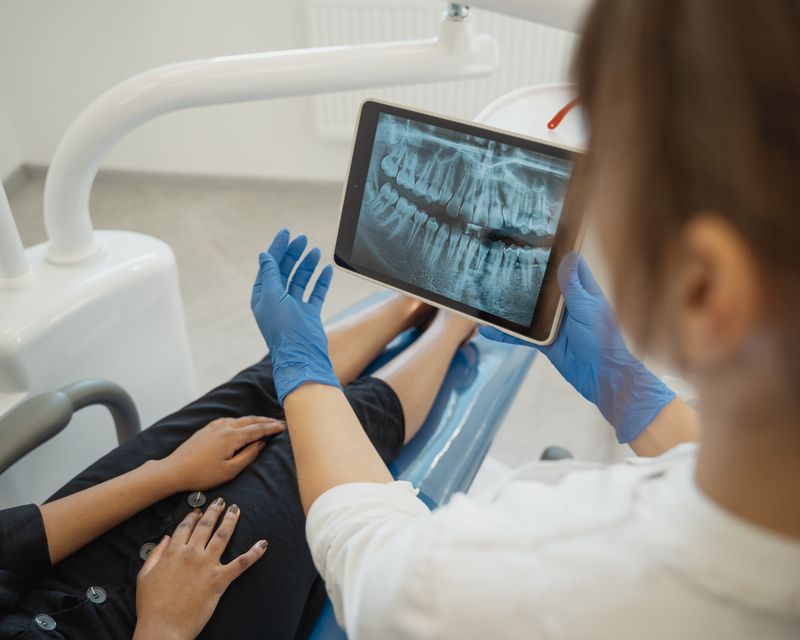
A detailed examination with X-rays, scans, photographs and bite records of your whole mouth.
Your plan is designed, often with a mock-up or trial smile, so you can see and approve the new shape before treatment.
Gum treatment, root canals, extractions and implant placement are completed and allowed to heal.
Temporary teeth test the new bite first. Final crowns, bridges and implant teeth follow, one area or arch at a time.
Your bite is fine-tuned, a night guard may be made, and regular reviews keep everything working well.
Full mouth rehabilitation usually takes several months, longer when implants or gum treatment are involved. The exact timeline is set out in your plan.

A longer treatment needs to fit your life. Your care is organised so you know what is happening at every stage and are never left without teeth:
Photographs on this page are illustrative and do not show clinic patients or results.
It depends on what your mouth needs. Plans with crowns and bridges alone often take a few months. Plans that include gum treatment, bone grafting or implants usually take longer, because healing time is built in between stages.
Each procedure is done under local anaesthesia, so most people feel pressure rather than pain. Some tenderness or sensitivity after certain stages, such as implant placement, is normal and usually settles within a few days.
Yes. Temporary crowns, bridges or dentures are provided between stages so you can eat, speak and smile. They also let you and your dentist test the new bite before the final teeth are made.
A smile makeover mainly improves how the front teeth look. Full mouth rehabilitation focuses on health and function across both jaws, including the bite and chewing, while also improving appearance.
With good daily cleaning, a night guard if you grind, and regular reviews, crowns, bridges and implant teeth can serve you well for many years. Individual pieces may need repair or replacement over time, as with any dental work.
Often, yes. The plan can usually be divided into phases, starting with the most urgent work. Your dentist will explain which stages can be spaced out and which need to be done together for the bite to work.
Many people with well-managed conditions can have full mouth rehabilitation. Some conditions and medicines affect healing, especially for implants, so please share your full medical history so the plan can be adjusted safely.
BOOK A CONSULTATION
A detailed examination shows what your teeth, gums and bite need. You will leave with a clear, staged plan, the expected visits and timeline, and an estimate, with no pressure to start.
Broken tooth or dental work come loose? Call and we will try to see you as soon as possible.