
ENDODONTICS AND RESTORATIVE DENTISTRY
Saving your natural tooth, calmly and carefully.
When the soft tissue inside a tooth becomes inflamed or infected, a root canal treatment cleans and seals the inside so the tooth can stay. Done under local anaesthesia, it usually feels much like having a filling.
Book a Consultation Explore Treatment Options
Local anaesthesia. Every step explained before it begins.

Your own tooth, kept and protected.
THE IDEA IN ONE PICTURE
Inside every tooth is the pulp: nerves and blood vessels running through narrow canals in the roots. When it is inflamed or infected, the pulp is gently removed, the canals are cleaned and shaped, then sealed. A filling or crown on top protects the tooth so it can keep working for years.
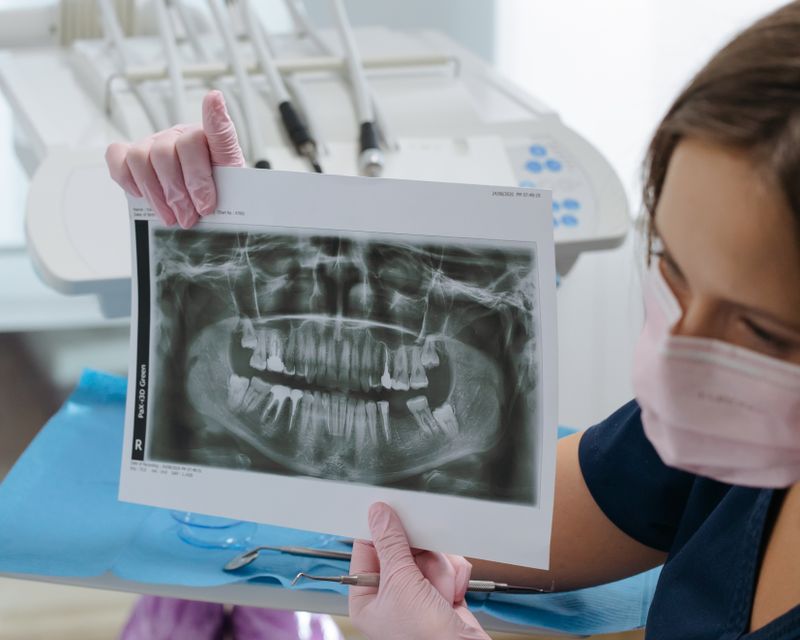
Whether root canal treatment suits a tooth is decided only after examination and an X-ray.
Illustrative concept of root canal treatment.
Some teeth that need root canal treatment cause clear symptoms. Others cause none at all and are found on an X-ray. These are common signs worth having checked.
Decay that has reached close to the nerve, or a tooth that has had repeated large fillings.
A sharp or aching feeling that stays for a while after the hot or cold has gone.
Tenderness on chewing, or an ache that wakes you at night or comes on by itself.
A small bump near the tooth that may release fluid, or swelling in the gum or face.
A knock, fall or crack can damage the pulp, sometimes weeks or months later.
A grey or darker tooth can be a sign that the nerve inside is no longer healthy.
When to seek care urgently. Swelling that is spreading across the face or neck, a fever with tooth pain, or difficulty swallowing, opening your mouth or breathing needs urgent dental or medical care the same day. Severe pain or an injury to a tooth should also be seen promptly.
Tooth pain can come from the pulp, the gums, a crack, or even a neighbouring tooth. Your dentist checks several things before recommending a way forward:
Not every painful tooth needs a root canal. Sometimes a filling, a gum treatment or simply monitoring is the right answer.
Root canal treatment is one of several ways to manage a tooth with a damaged pulp, and some are combined. The choice is made only after assessment.
The tooth is numbed and isolated, the inflamed or infected pulp is removed, and the canals are cleaned, shaped and disinfected. They are then sealed with a rubber-like filling material.
When the pulp cannot recover or has become infected, and the tooth is strong enough to be restored. It may be done in one visit or over two or more.
A custom-made cap covers the treated tooth to hold it together and protect it from cracking. A temporary filling is placed in between, then the crown is fitted once ready.
Often advised for back teeth that take heavy biting forces, or any tooth that has lost a lot of its structure. Some front teeth only need a filling.
Only the damaged part of the pulp is removed or protected with a medicated material, so the healthy pulp in the roots can stay alive. This is also called a pulp cap or pulpotomy.
When the inflammation is limited and the rest of the pulp is judged healthy, especially in children and young teeth whose roots are still developing.
The old filling material is removed, the canals are cleaned again, including any that were missed, and then resealed. It often takes more than one visit.
When a tooth that had root canal treatment before shows new pain, swelling or signs of infection on an X-ray.
A minor procedure, also called an apicoectomy, that reaches the root tip through the gum, removes the infected tissue and the very end of the root, then seals it.
When infection persists at the root tip after treatment and retreatment through the tooth is not possible or not advisable.
The tooth is removed, and the gap can later be filled with an implant, a bridge or a denture, depending on your mouth and preferences.
When a tooth is too broken down, cracked into the root, or lacks the bone support to be saved predictably. Your dentist will explain why if this is the case.
The tooth is examined and X-rayed, then numbed with local anaesthesia and isolated with a thin rubber sheet to keep it clean and dry.
A small opening gives access to the pulp. The canals are measured, cleaned, shaped and rinsed with disinfecting solutions.
The canals are filled and sealed to keep bacteria out. A temporary filling closes the tooth between visits if needed.
A permanent filling or crown is placed, your bite is checked, and a review X-ray may be planned to confirm healing.
The number of visits, imaging and the final restoration depend on the tooth and how much infection is present.

Many people expect root canal treatment to hurt. Today it is usually no more uncomfortable than a filling, and it often relieves the pain that brought you in. Your care is planned to keep you at ease:
Photographs on this page are illustrative and do not show clinic patients or results.
The tooth is numbed with local anaesthesia, so most people feel pressure rather than pain. The treatment often relieves the toothache caused by the inflamed pulp. Some tenderness for a few days afterwards is normal.
Many teeth are treated in one or two visits. Teeth with several curved canals, active infection or previous treatment may need more. A crown, if advised, usually needs one or two further visits.
Not always. Back teeth and teeth that have lost a lot of structure are usually crowned to stop them cracking. A front tooth with plenty of healthy structure may only need a filling. Your dentist will advise for your tooth.
With a good seal, a well-fitting filling or crown and regular care, a treated tooth can last for many years, often a lifetime. Decay, cracks or gum disease can still affect it, so check-ups remain important.
Keeping your natural tooth is usually preferred when it can be restored well, because it keeps your bite, bone and neighbouring teeth stable. Removal followed by an implant, bridge or denture is an option when a tooth cannot be saved predictably. Your dentist will talk through both.
The tissues around the root can stay sore for a few days while they settle, especially if there was infection. This usually eases steadily. If pain increases, or swelling appears, contact the clinic.
Yes, with the right approach. Children may have vital pulp therapy to keep young teeth healthy. During pregnancy, necessary treatment can usually be carried out with suitable precautions. Please tell your dentist if you are pregnant or have any medical conditions.
BOOK A CONSULTATION
An examination and X-ray show whether the tooth can be saved and which treatment suits it. You will leave with a clear plan, the expected visits and an estimate, with no pressure to start.
In pain today? Call and we will try to see you as soon as possible.